“To be truly visionary, we have to root our imagination in our concrete reality while simultaneously imagining possibilities beyond that reality.”
— bell hooks
We are living through a moment saturated with anxiety: fear of AI replacing human labor, deepening political divisions, war, displacement, climate instability, and an increasing sense that the future is something happening to us rather than something we can shape.
At a time when uncertainty can narrow our imagination and make it difficult to envision a different future, Ocean of Dreams asks a simple question: Can we dream together?
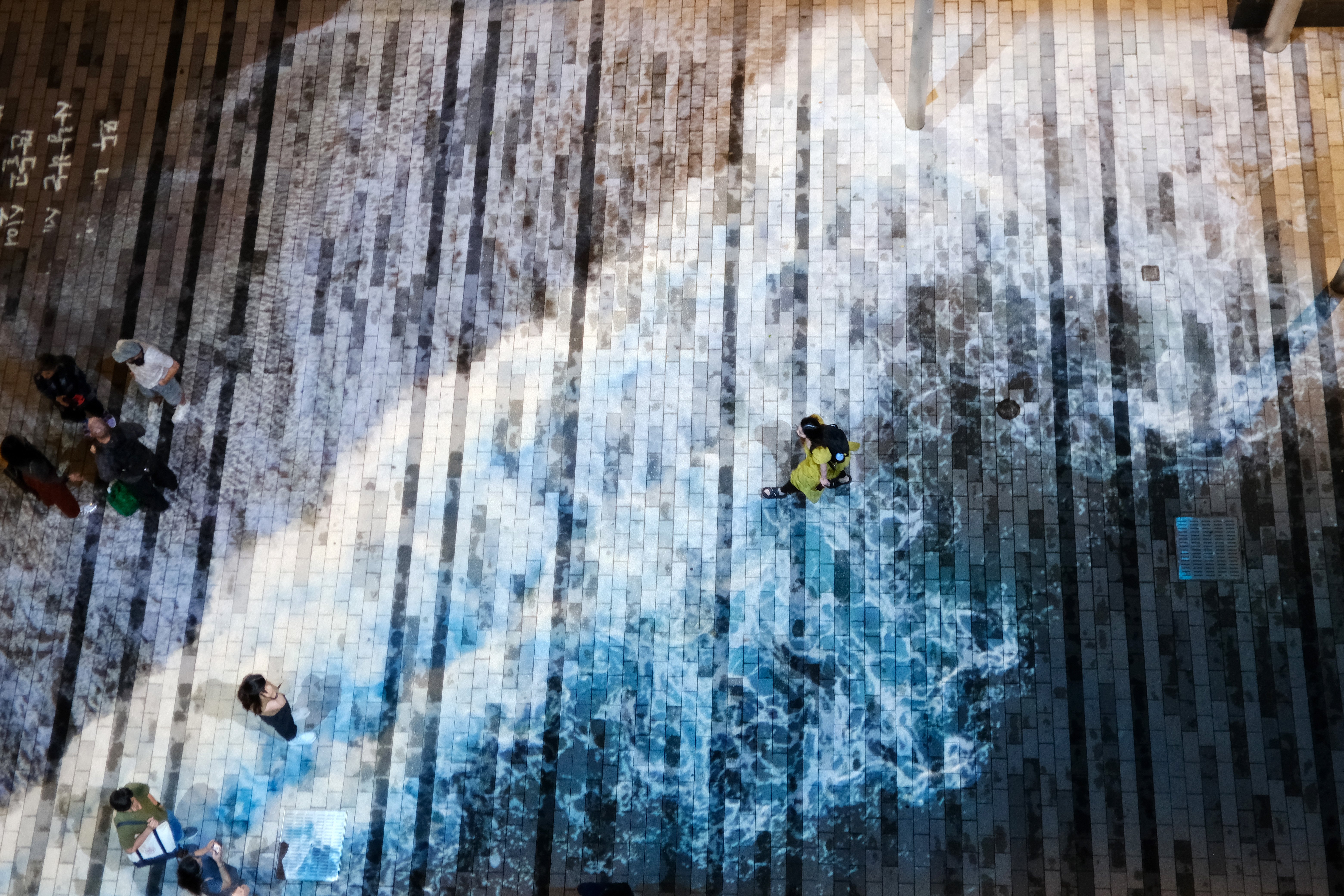
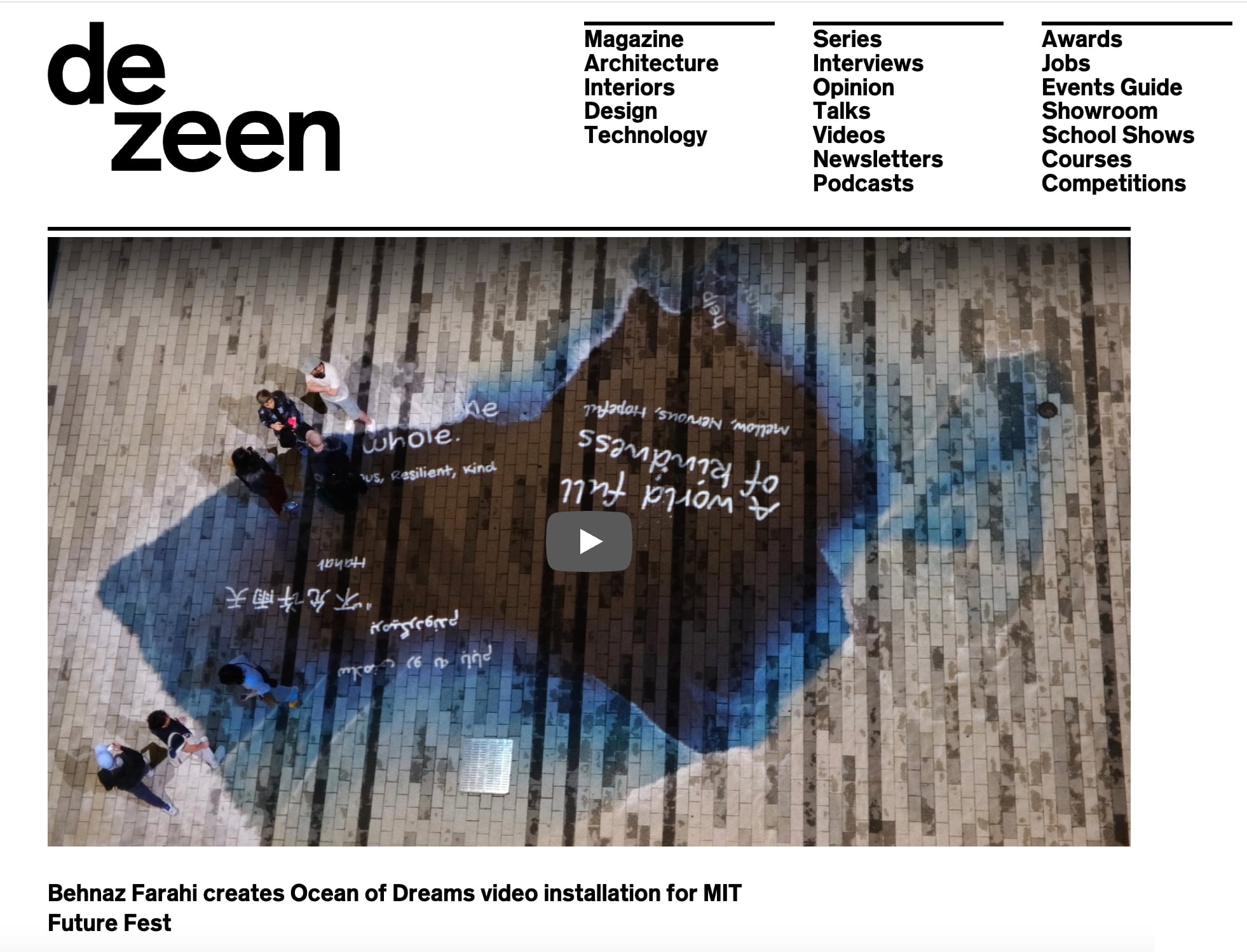
Ocean of Dreams is a participatory public artwork that transformed MIT Kendall Plaza into a living ocean of collective hopes. Through a multilingual web experience, more than 430 people shared their dreams for the future. Their words were transformed into handwritten text and projected across an evolving landscape of ocean, waves, and sand, allowing individual dreams to become part of a larger public field of collective imagination.
The project approaches imagination not as an escape from present realities, but as a way of engaging with them differently. Before we can create another future, we must first be able to imagine that things could be otherwise.
As Rebecca Solnit writes in Hope in the Dark:
“In the spaciousness of uncertainty is room to act.”
For Ocean of Dreams, hope is not passive optimism or certainty that things will improve. It is a form of agency: a recognition that the future is not yet fixed and that uncertainty can also contain possibility.
Rather than treating the future as something simply to be predicted, optimized, or handed to us, Ocean of Dreams asks what might happen if we create space to imagine it together.
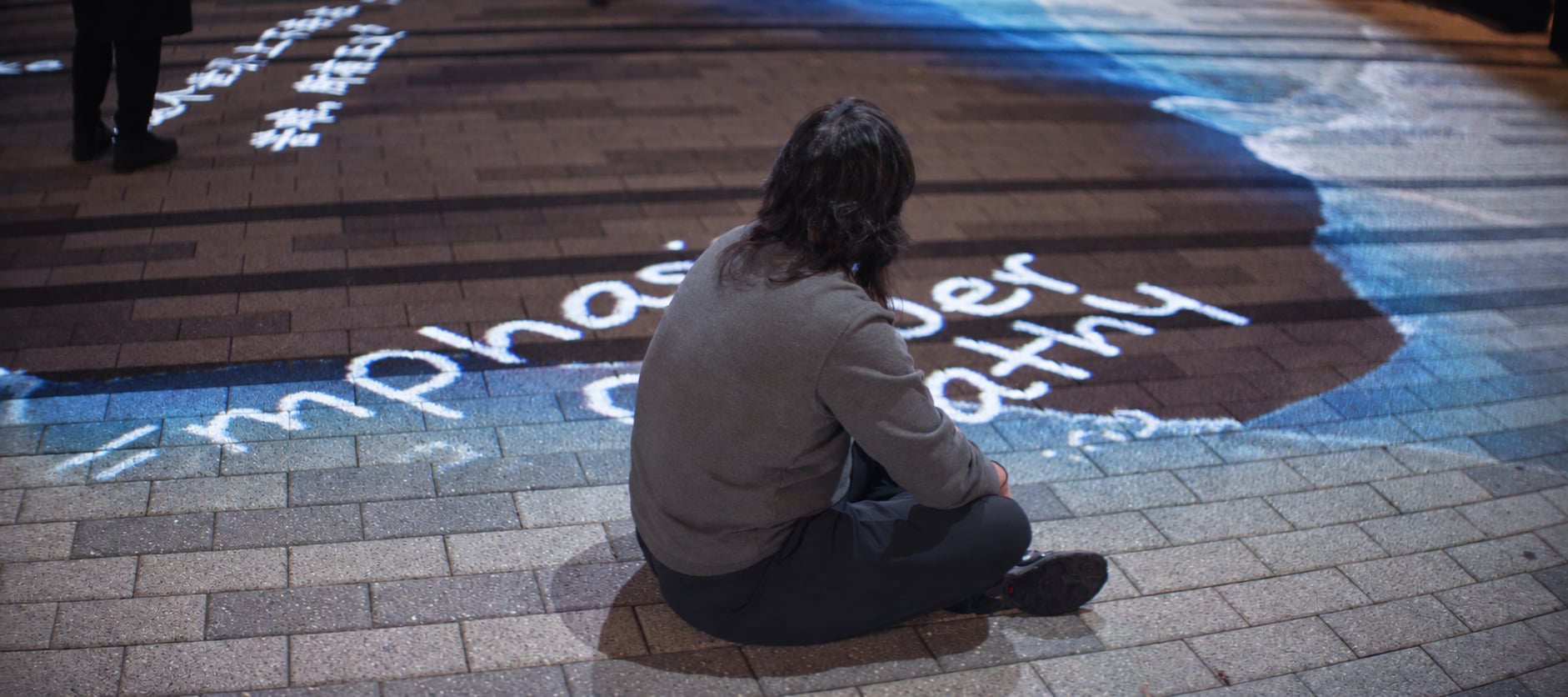
The project began with the development of a multilingual digital platform through which participants could anonymously contribute their dreams for the future. Each response entered a growing archive of individual hopes while remaining connected to the larger collective field.
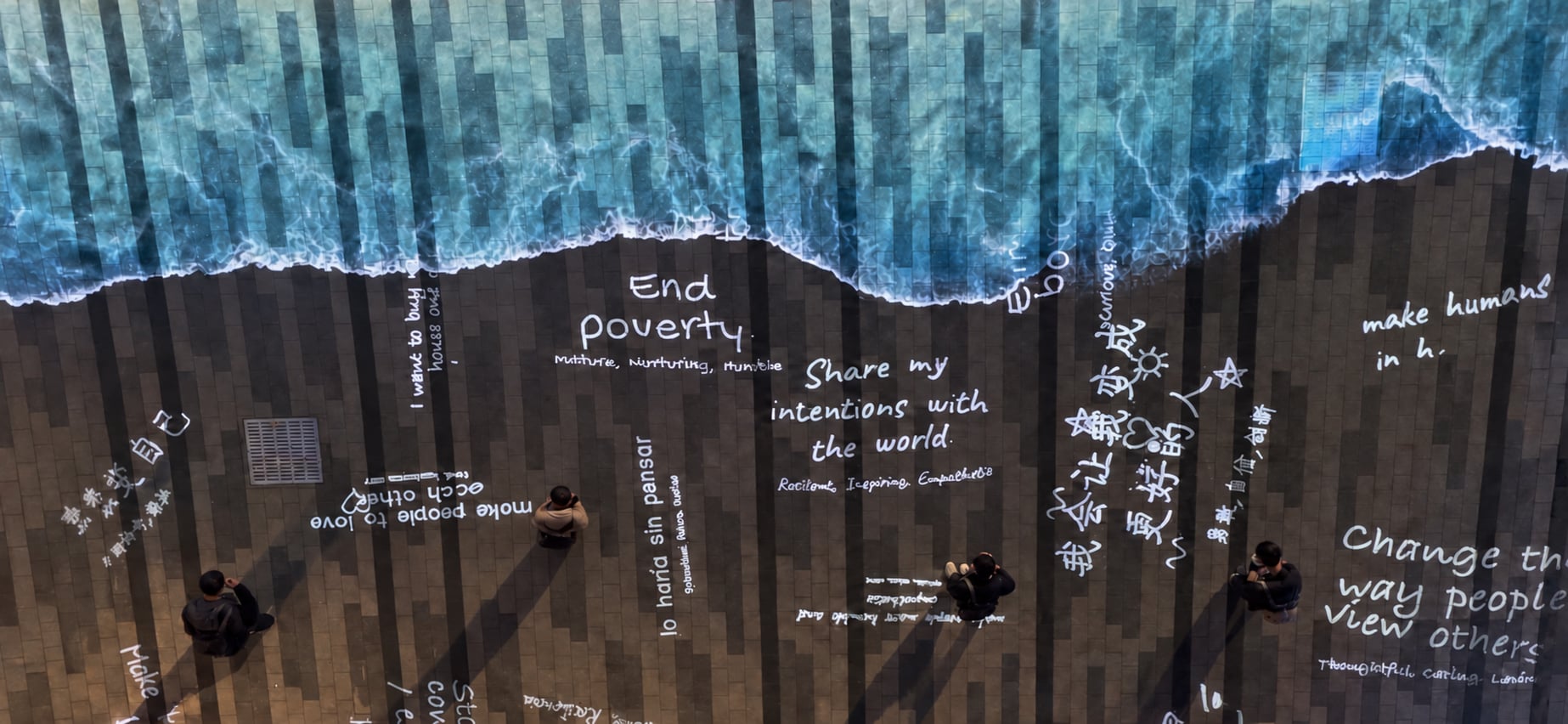
Each dream begins as an individual act of imagination. But when hundreds of these dreams are gathered in public space, they begin to form something larger: a collective landscape of hopes, desires, concerns, and possibilities.
Developed for MIT Kendall Plaza, Ocean of Dreams translates these digital contributions into an architectural-scale public projection. Submitted dreams become handwritten visual elements embedded within moving aerial footage of the ocean, allowing language and landscape to continuously merge.
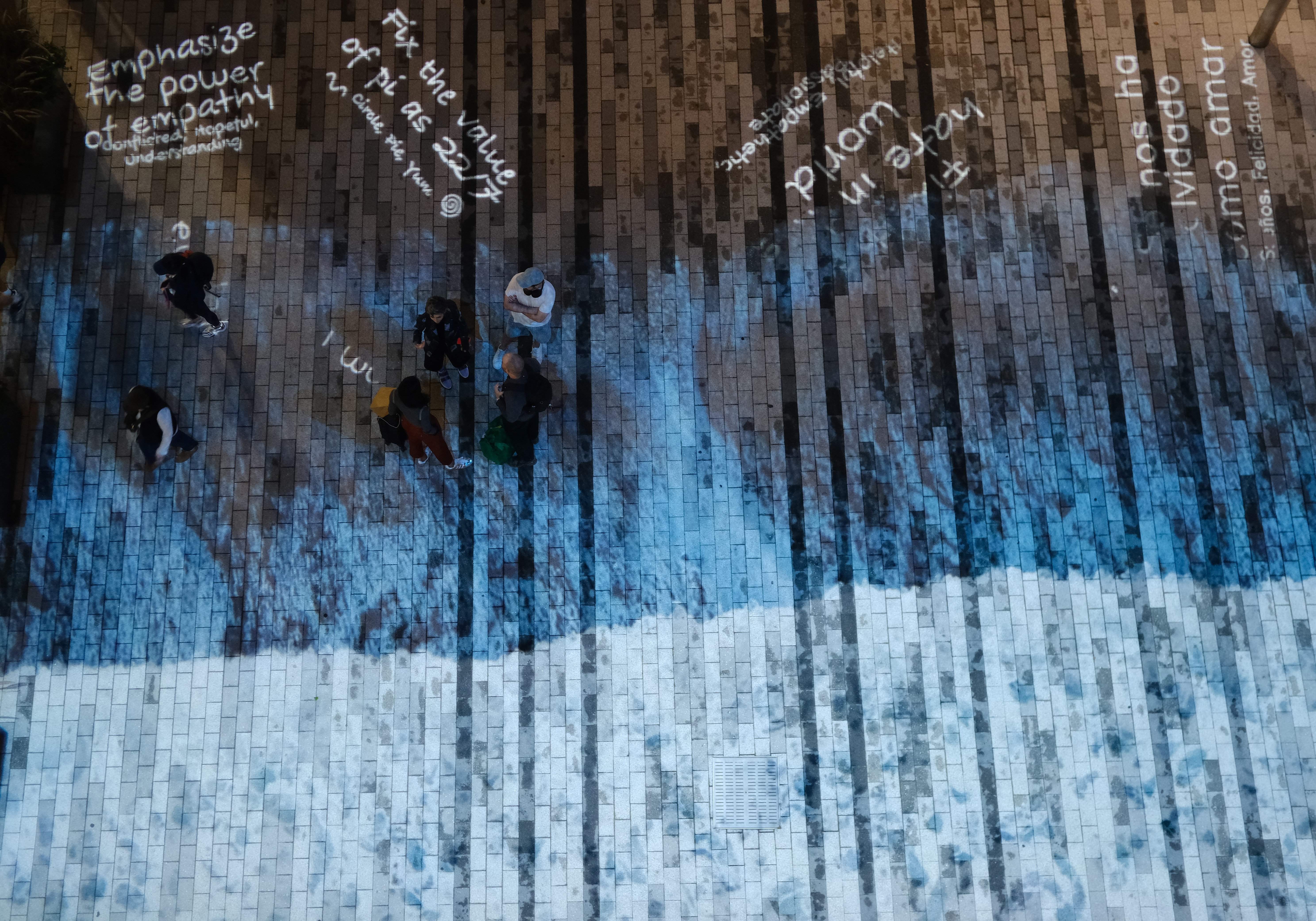
Rather than presenting each contribution as an isolated message, the installation situates individual dreams within a shared visual environment. Words emerge across the sand, and coexist with hundreds of other contributions. In this way, the plaza becomes a collective landscape in which private acts of imagination are temporarily made public.
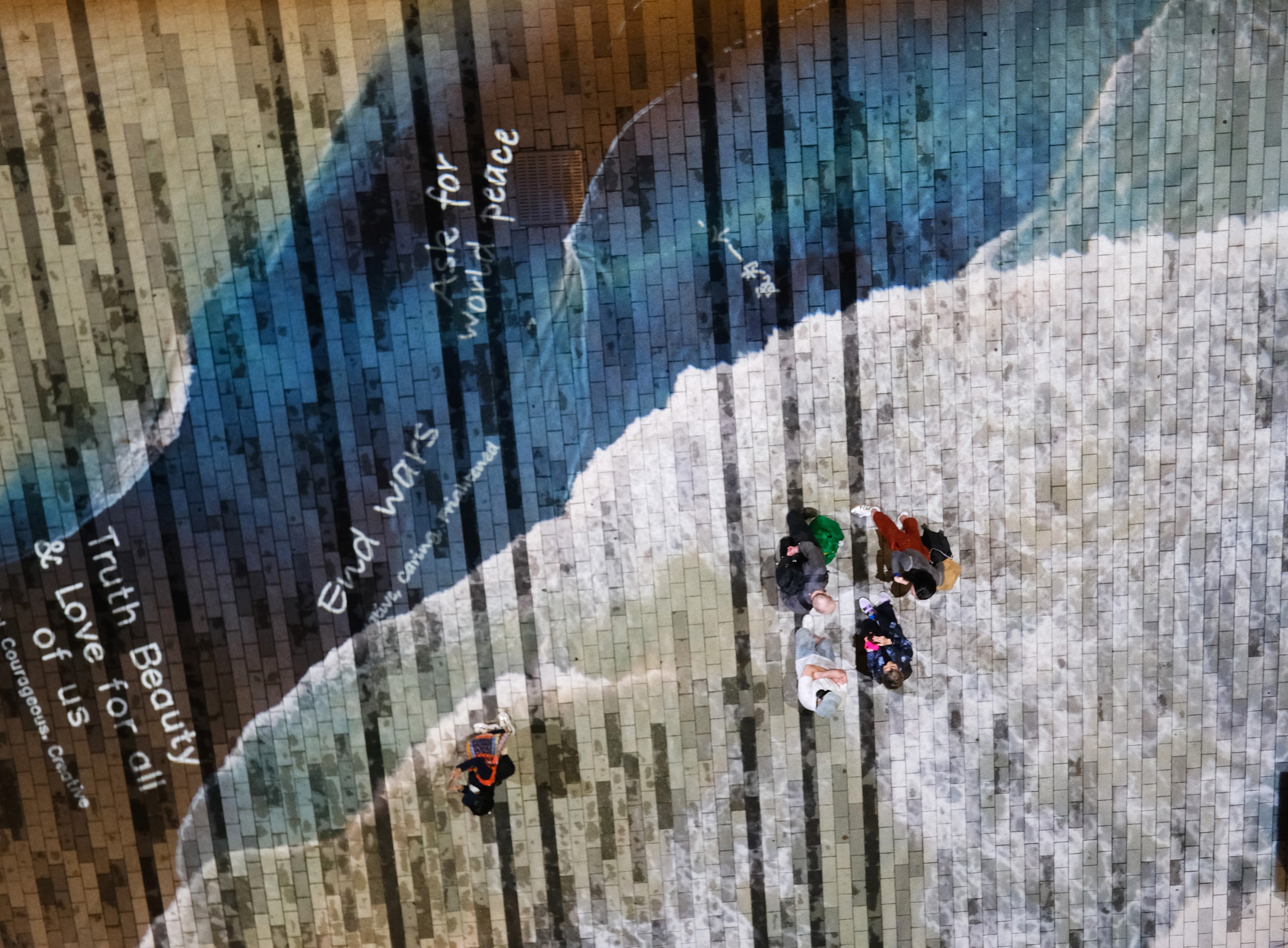
The installation was designed as a large-scale projection environment covering approximately 75 by 38 feet of Kendall Plaza, creating a projected surface of roughly 2,850 square feet. Two Panasonic PT-RQ35K 30,000-lumen laser projectors equipped with ET-D3LEW300 lenses were mounted above the plaza to create the continuous projected field.
The visual composition combines aerial ocean footage, participant-generated text, typography, and real-time visual processing. Ocean footage was developed in collaboration with Jan Erik Waider, whose aerial imagery captures coastal landscapes in northern Iceland, with music by Justin Boreta.
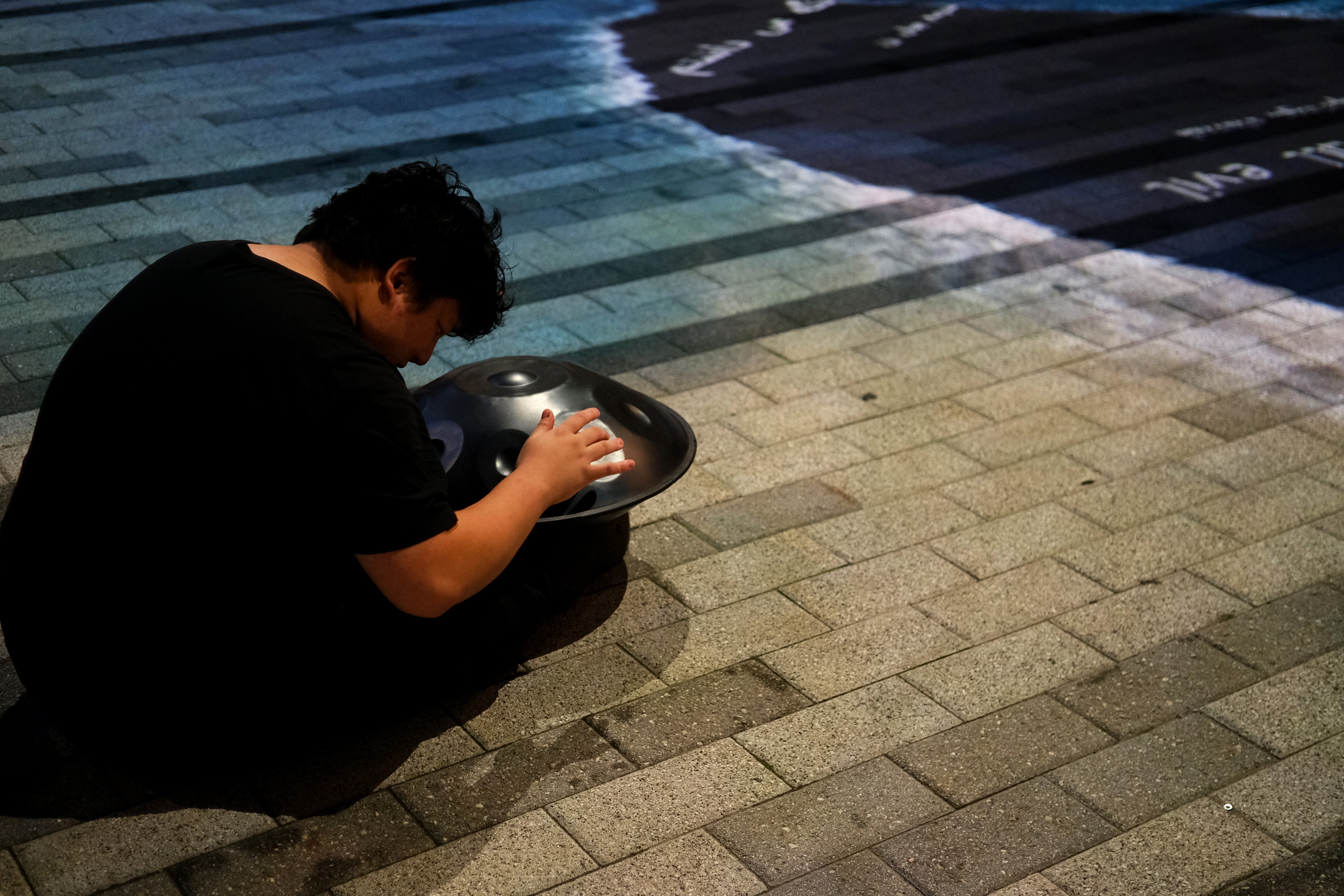
The visual system was developed in TouchDesigner, where participant submissions were transformed into handwritten text and composited into the moving ocean environment. Content was transmitted through a dedicated NDI network to the projection system and mapped onto the architecture of Kendall Plaza.
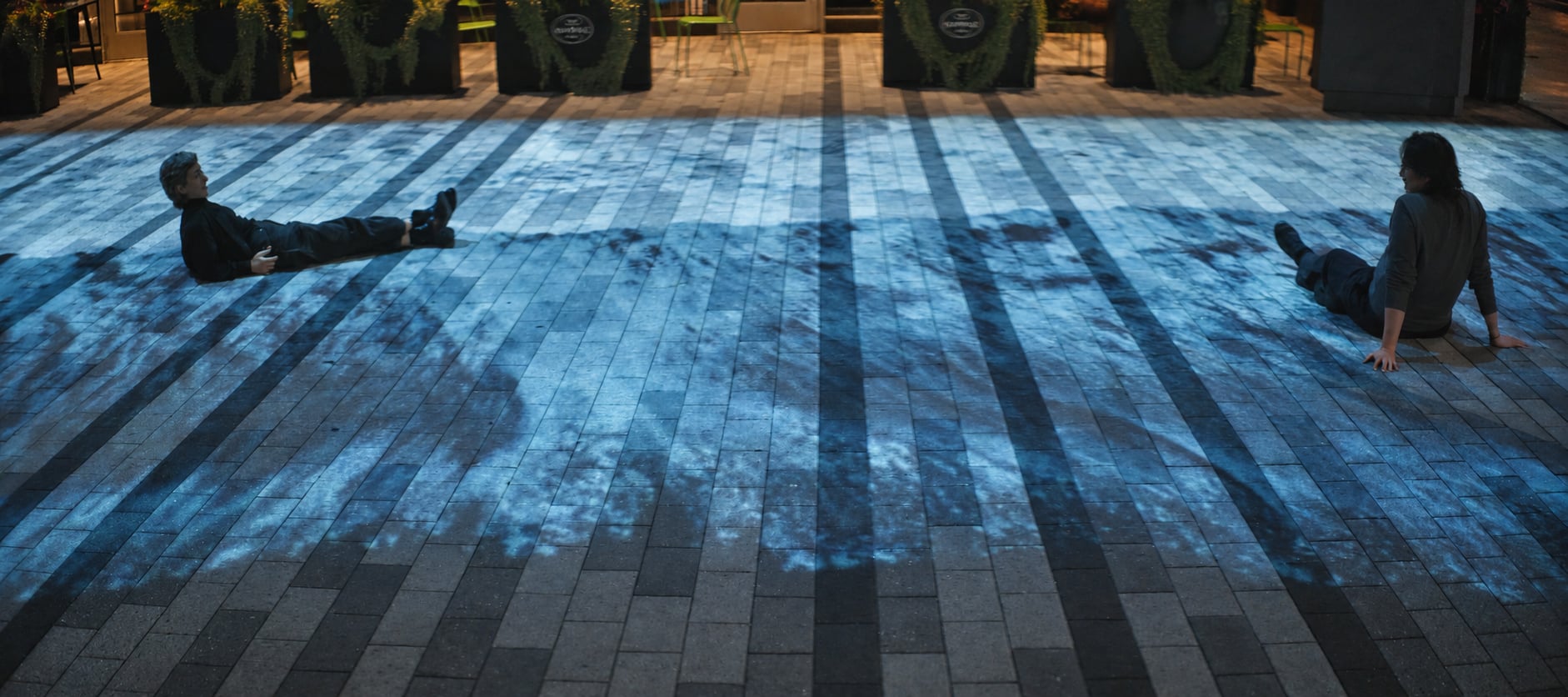
More than 430 dreams were collected through the multilingual platform. Each began as an individual response to a simple invitation to imagine the future. When brought together through the installation, these contributions formed a larger field of recurring desires, concerns, hopes, and possibilities.
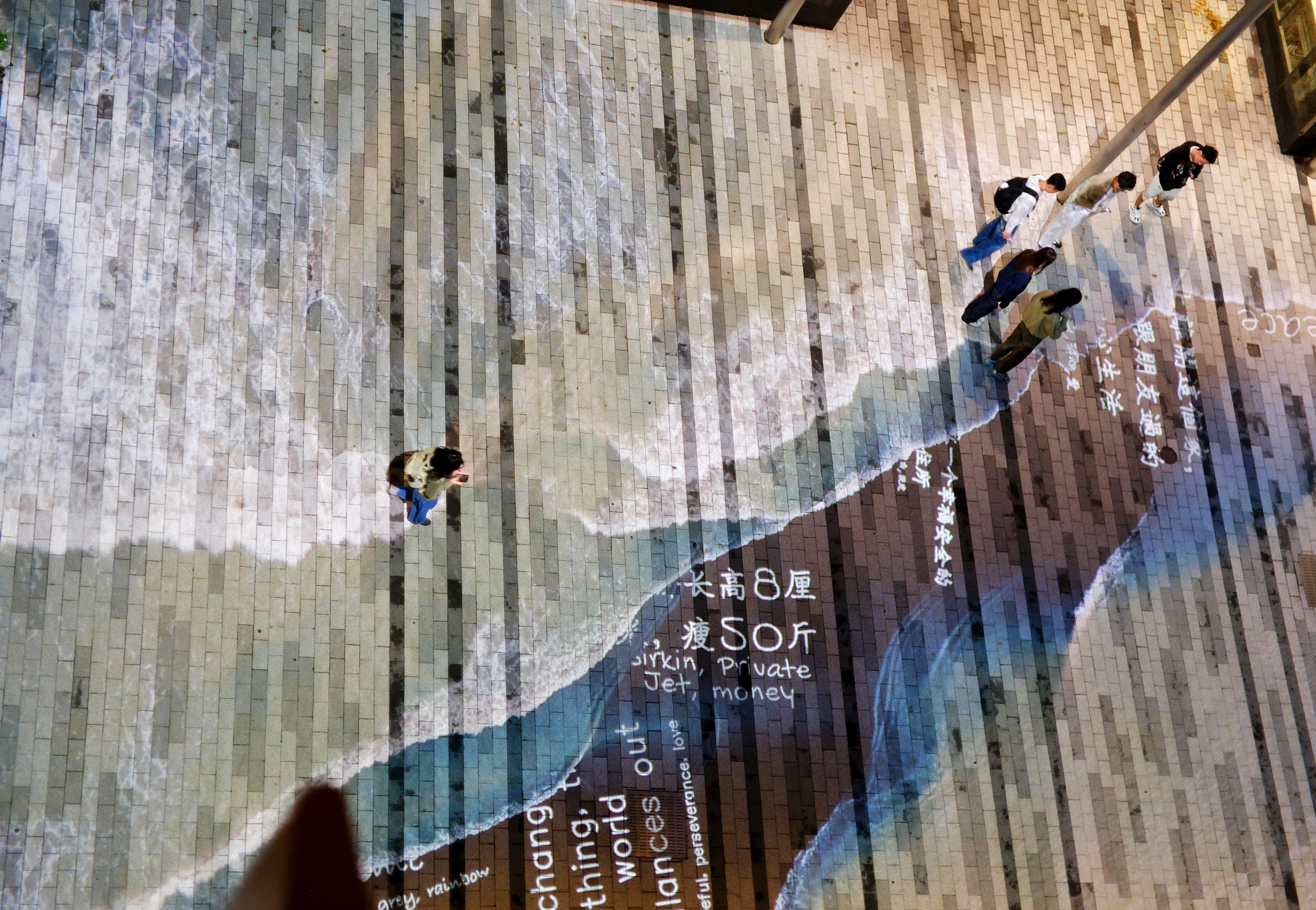
Ocean of Dreams was realized as a public experience during the 2026 MIT Future Fest, inviting visitors to walk through the projected ocean while encountering the dreams of others.
Rather than treating the future as something simply to be predicted, optimized, or handed to us, the project asks what might happen if we create space to imagine it together.
Perhaps one of the most radical things we can do right now is imagine.
Let’s dream together.
- Behnaz Farahi
- Saetbyeol LeeYouk
- Jake Tan
- Yuxiang Cheng
- Ruipeng Wang
- Jan Erik Waider
- Justin Boreta
- Brandon Baho
Credit
- MIT Future Fest
- MIT Museum
- MIT Media Lab
- Critical Matter Group